Quick Answer
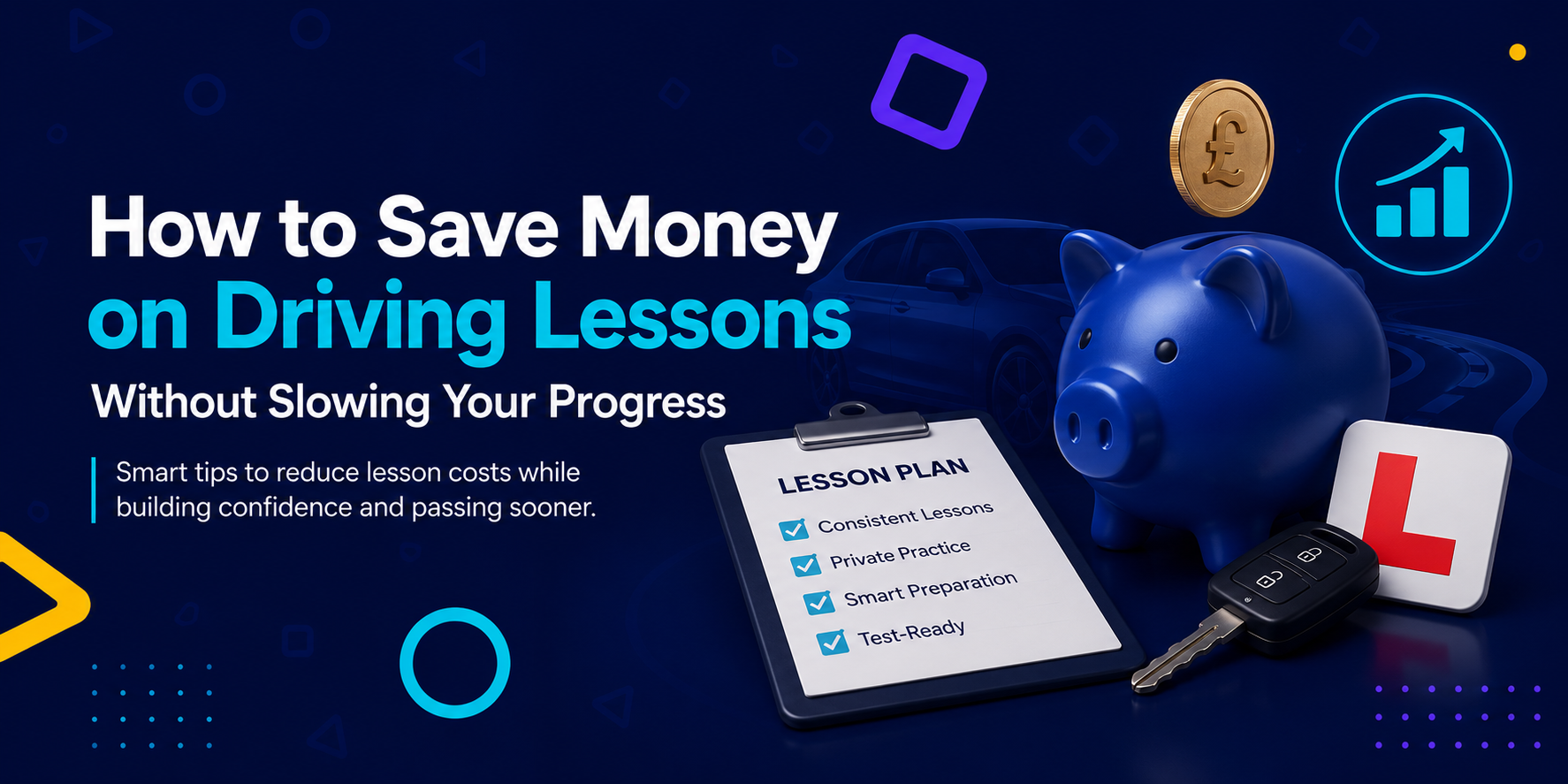
The best way to reduce total cost is to choose a suitable instructor, learn consistently, practise legally between lessons and avoid paying for a test before you are ready. The cheapest hourly rate is not always the best value.
Compare the Full Lesson Price
Check the session length, standard rate, introductory rate, weekend charges, test-day vehicle fee and cancellation terms.
Convert different lesson lengths into an hourly equivalent so you can compare fairly.
Book Consistently
Long gaps can lead to time being spent rebuilding confidence and revisiting earlier routines. Choose a schedule you can maintain instead of booking several lessons quickly and then stopping.
Use Private Practice Safely
Legal, supervised practice can reinforce skills introduced by the instructor. Make sure the learner, supervisor, insurance and vehicle meet the rules.
Ask the instructor what to practise so paid lesson time can focus on development rather than repetition.
Be Careful With Block Bookings
A block discount can reduce the hourly rate, but check the refund policy, expiry date and cancellation terms first.
Take an initial lesson before making a large payment so you know the instructor is suitable.
Prepare for Each Lesson
Review previous feedback and arrive with questions. Being mentally prepared helps the instructor spend more time on useful practice.
Avoid arriving tired, late or distracted.
Do Not Book the Test Too Early
An unsuccessful test can add the cost of another fee, more lessons and another test-day vehicle booking. Wait until safe performance is consistent.
Choose Value Over the Lowest Price
An instructor who communicates clearly, provides regular slots and gives honest progress feedback may help you use each hour more effectively.
Read reviews and compare availability, not only headline price.
Reduce Avoidable Cancellation Costs
Understand the notice period and set reminders. Repeated late cancellations can waste money and disrupt progress.
Track Your Spending and Progress
Record lesson dates, hours, payments and skills covered. This helps you see whether the current plan is producing steady progress.
Next Step
Use Driveli to compare lesson information and local instructor availability. Build a realistic budget that includes tuition, tests, private-practice insurance and test-day costs.
Sources
GOV.UK: Driving lessons and learning to drive; Driving test costs; supervising learner guidance.