The Short Answer
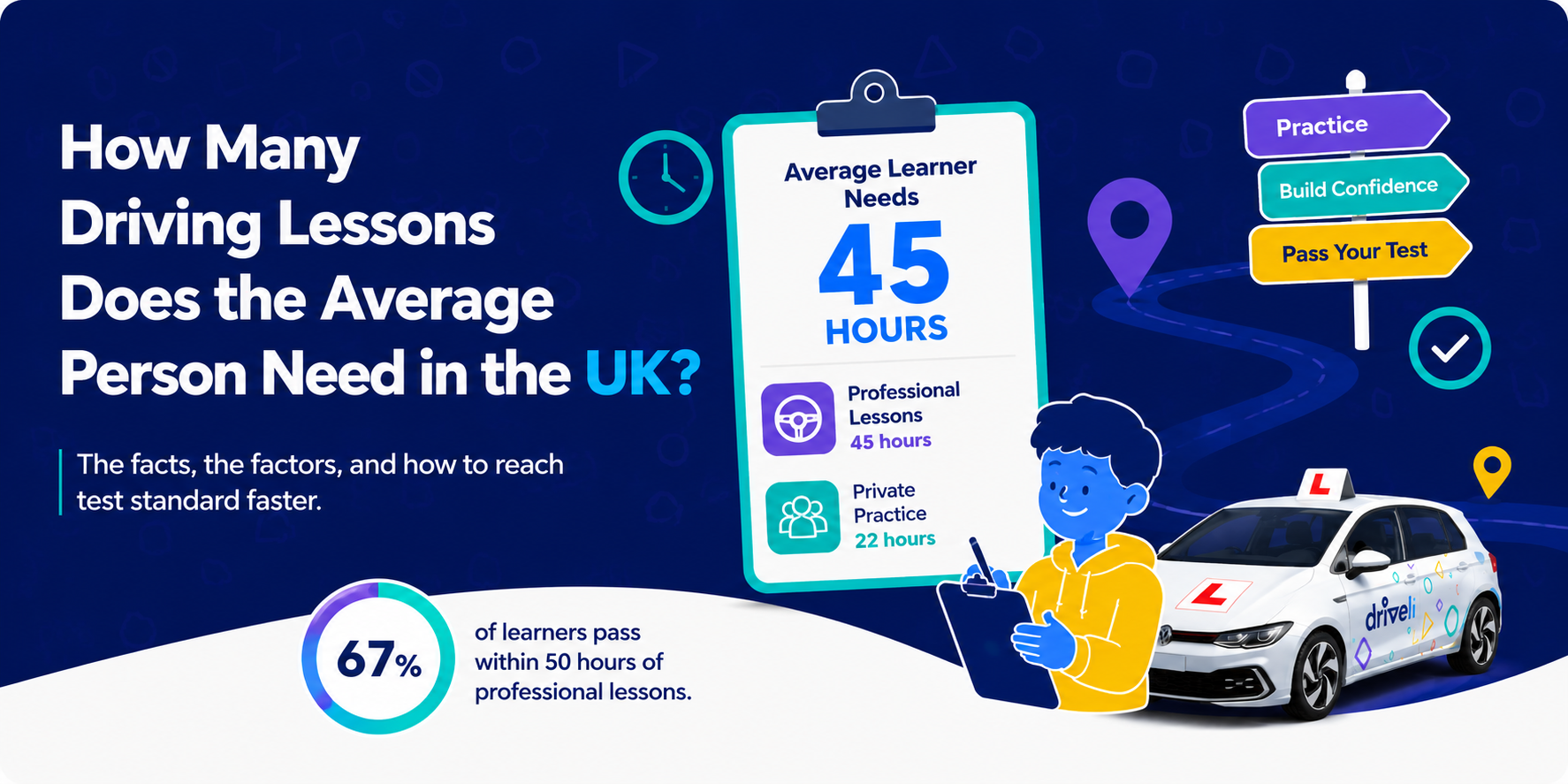
According to the DVSA, the average learner driver needs 45 hours of professional driving lessons plus around 22 hours of private practice to reach test standard. That said, plenty of people pass in fewer lessons — and plenty need more. The honest answer is: it depends on you.
Why Averages Are Misleading
The 45-hour figure is a useful benchmark, but driving is a physical skill. How quickly you progress depends on factors that have nothing to do with intelligence:
Previous experience — Have you driven abroad, on private land, or in go-karts? Spatial awareness transfers.
How often you take lessons — Two lessons a week will build muscle memory faster than one a fortnight.
Whether you practise privately — Learners who supplement lessons with private practice in a parent or partner's car consistently reach test standard faster.
The complexity of where you learn — Learning to drive in central Manchester involves vastly different challenges from a quiet market town.
Anxiety levels — Driving anxiety is real and common. A good instructor will work with you, not rush you.
How Many Lessons Do Different Types of Learners Need?
Complete beginners with no private practice
Expect to need 40–50 professional lessons. Without private practice, your instructor will need to spend more time consolidating what was covered in the previous session before introducing anything new.
Beginners who also practise privately
If you can get behind the wheel between lessons — even for 30 minutes — you can often reach test standard in 30–40 professional lessons. Private practice locks in muscle memory and lets your paid lesson time focus on refinement rather than repetition.
People who learned previously but never passed
If you had lessons years ago and are returning to lessons, you may need fewer hours than a complete beginner — but don't assume old habits are good habits. Many returning learners have picked up small errors that need correcting before they'll pass a modern driving test.
People who drive off-road or abroad
Farm drivers, off-road vehicle users, or people who drove on foreign roads often progress faster once adapted to UK road conditions.
The Real Cost of Rushing
Many learners want to pass as quickly as possible, and that's completely understandable — lessons aren't cheap. But taking your test before you're genuinely ready is a false economy. The average UK driving test fee is £62 for a weekday test. Failing twice costs more than taking an extra 10 lessons before your first attempt.
More importantly, test-day nerves are a real factor. Aim to be comfortably above test standard so that a slightly nerve-affected performance still results in a pass.
How to Know When You're Actually Ready
A good instructor will give you honest, regular feedback. There are also things you can watch for yourself:
Are you completing manoeuvres without being prompted by your instructor?
Can you identify hazards before your instructor points them out?
Are your lessons going by with very few corrections?
Do you feel calm and in control, rather than relieved when you pull back onto your street?
Tips for Getting to Test Standard Faster
1. Take lessons at least once a week
Fortnightly lessons mean you spend the first 20 minutes of every lesson recovering ground. Weekly lessons — or twice weekly if you can afford it — keep the learning momentum going.
2. Supplement with private practice
Any time you spend behind the wheel counts. Even a short drive to the supermarket with a parent reinforces what you've been taught. Check that the car you practise in is insured for learner drivers.
3. Ask your instructor for a mock test
A mock test — a 40-minute drive that mimics real test conditions — is one of the best ways to identify gaps. Many learners who feel confident are surprised by what a mock test reveals.
4. Don't compare yourself to others
Someone passing in 20 lessons is either exceptionally talented, already had significant experience, or was very lucky. The only question that matters is: are YOU ready?
What About Intensive Courses?
Intensive driving courses — where you take lessons every day over one or two weeks — can be an effective way to pass quickly if your schedule allows. They work best for people who have some prior experience. For complete beginners, pass rates for intensive courses tend to be lower than for traditional weekly lessons.
Ready to Start?
The best time to start lessons is now. Find an experienced, well-rated instructor in your area and start building toward your test at a pace that works for you.
Browse qualified driving instructors in Manchester, Birmingham, and London on Driveli — compare availability, read real reviews, and book your first lesson today.