What Is the Driving Theory Test?
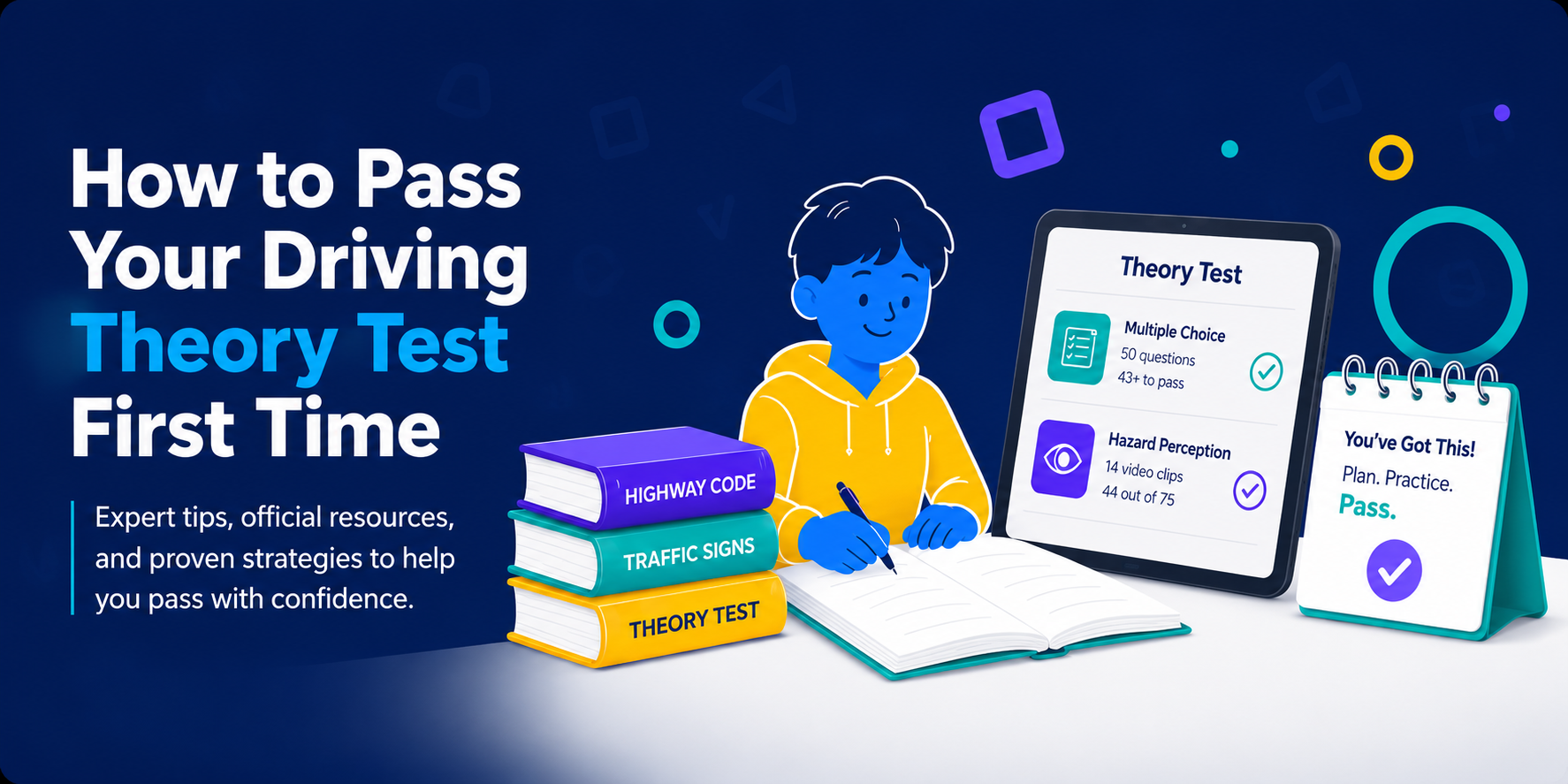
Before you can take your practical driving test in the UK, you must pass the driving theory test. It has two parts, both taken in the same appointment at a DVSA test centre:
Multiple-choice questions — 50 questions from the official DVSA question bank. You need to answer at least 43 correctly to pass (86%).
Hazard perception — 14 video clips of real driving situations. You click whenever you see a developing hazard. The pass mark is 44 out of 75.
You must pass both parts in the same sitting. The test costs £23, and you can take it from age 15 years and 9 months.
Why Do So Many People Fail?
In 2022/23, the pass rate for the theory test was around 47%. That means more than half of everyone who sits it fails. The most common reasons are:
Relying on revision apps without understanding the underlying rules
Memorising answers rather than learning why they're correct
Underestimating the hazard perception section
Not practising under timed conditions
Testing too soon before they're actually ready
Step 1: Use the Official DVSA Materials
The single most important thing you can do is use official DVSA revision materials. The DVSA publishes the Highway Code, the Know Your Traffic Signs booklet, and the official DVSA theory test app. Every question in the test comes from the official question bank — around 700+ questions in total.
Step 2: Learn the Highway Code Properly
Many theory test failures come from gaps in Highway Code knowledge. Make sure you genuinely understand:
Stopping distances at different speeds (a very common question category)
Speed limits on different road types for different vehicle types
Road markings — what different lines and signs mean
Rules at junctions, roundabouts, and level crossings
Motorway rules
Rules for vulnerable road users — pedestrians, cyclists, motorcyclists
What to do in the event of a breakdown or accident
Step 3: Do Timed Practice Tests
You have 57 minutes to answer 50 multiple-choice questions. Practice under real conditions: set a timer, don't pause, don't look up answers mid-test. Aim to score consistently above 47/50 in practice before you book.
Step 4: Don't Underestimate Hazard Perception
Hazard perception trips up a lot of learners. You need to click as soon as you see a situation developing into a hazard — not when it's already obvious.
Common hazard perception mistakes
Clicking too late — By the time you think 'that looks dangerous', you've already missed the scoring window.
Clicking too often — If the system detects a pattern of rapid clicking, it will score that clip as zero. Click deliberately, not frantically.
Not watching the whole scene — Hazards don't always come from straight ahead. Check the edges, mirrors, and side roads in each clip.
How to practise hazard perception
The official DVSA app includes hazard perception practice clips. When you're travelling as a passenger, practise spotting potential hazards out of the window — it builds the same instinct.
Step 5: Book When You're Ready, Not When You're Eager
A simple rule: book when you're scoring 47/50 or above in multiple practice tests, and 48/75 or above in hazard perception practice. Don't book earlier.
On the Day
Bring your valid photocard driving licence. Arrive 15 minutes early. During the multiple-choice section, you can flag questions you're unsure about and return to them. Don't leave any unanswered.
After You Pass
Your theory test certificate is valid for 2 years. Book your practical test as soon as you can after passing your theory — practical test waiting times can be several months in busy areas.