Quick Answer
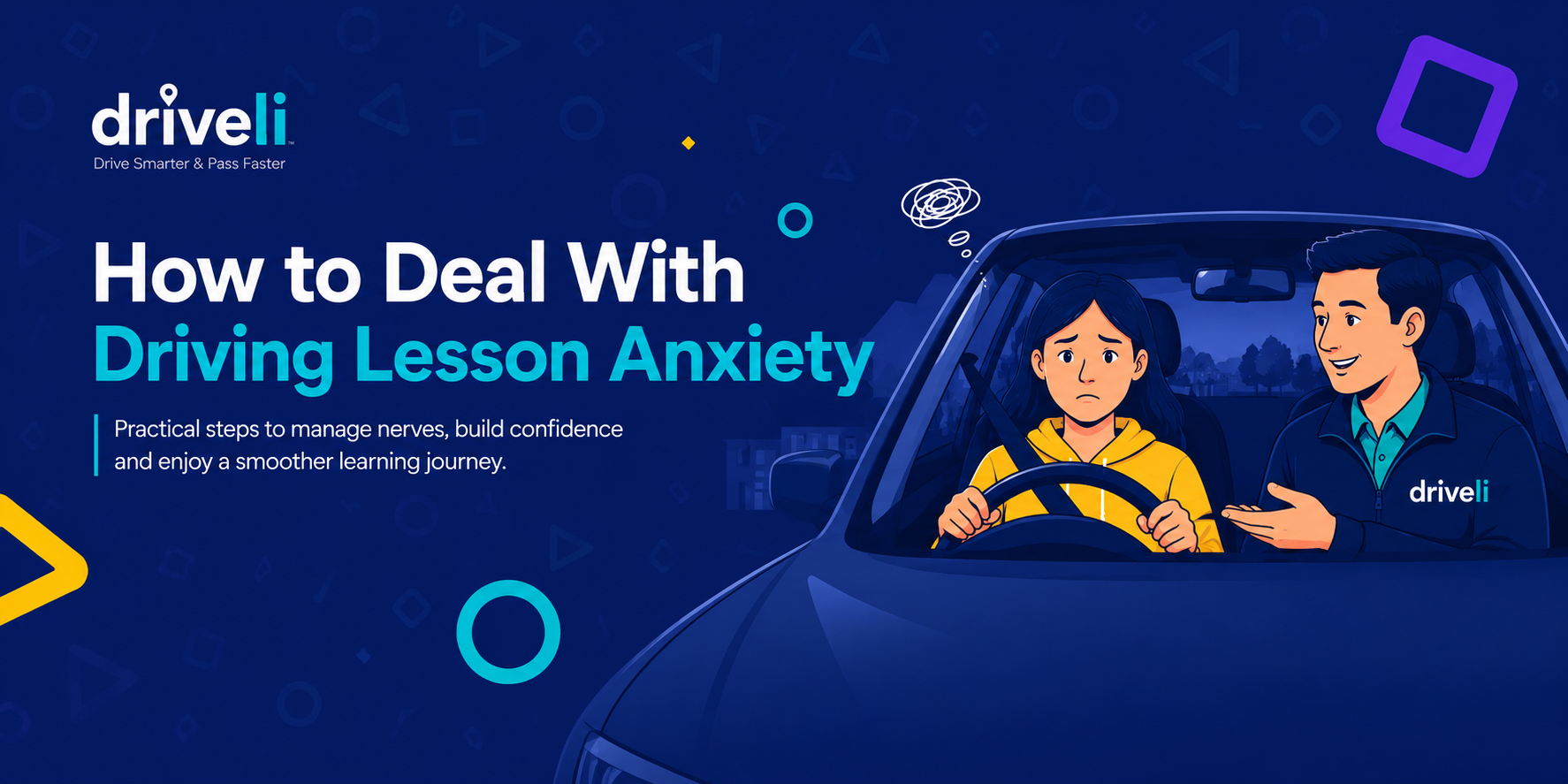
Driving lesson anxiety is common and can be reduced by telling your instructor, starting gradually, preparing properly and focusing on one task at a time. The aim is not to remove every nervous feeling before driving; it is to manage it safely.
Tell Your Instructor Early
Explain how anxiety affects you. You might struggle with busy traffic, making mistakes, being watched or processing several instructions at once.
A supportive instructor can adjust the route, pace, amount of explanation and lesson objective.
Start in a Suitable Environment
Confidence usually develops more effectively on roads that match your current ability. Beginning in a quieter area gives you time to practise vehicle control before adding complex junctions and heavy traffic.
Break the Lesson Into Small Tasks
Focus on the next safe action rather than the whole journey. For example: set up the car, check mirrors, prepare, check the blind spot and move away.
Smaller steps reduce mental overload and make improvement easier to notice.
Prepare Before the Lesson
Try to sleep properly, eat beforehand and avoid arriving in a rush. Wear comfortable clothes and bring water.
Briefly review your previous feedback, but do not spend hours imagining everything that could go wrong.
Use Breathing and Physical Relaxation
When safely stopped, slow your breathing and release tension from your shoulders, hands and jaw. Gripping the steering wheel tightly can make steering less smooth.
Tell the instructor if you need a short pause. Do not continue silently if anxiety is affecting safe decisions.
Avoid Comparing Your Progress
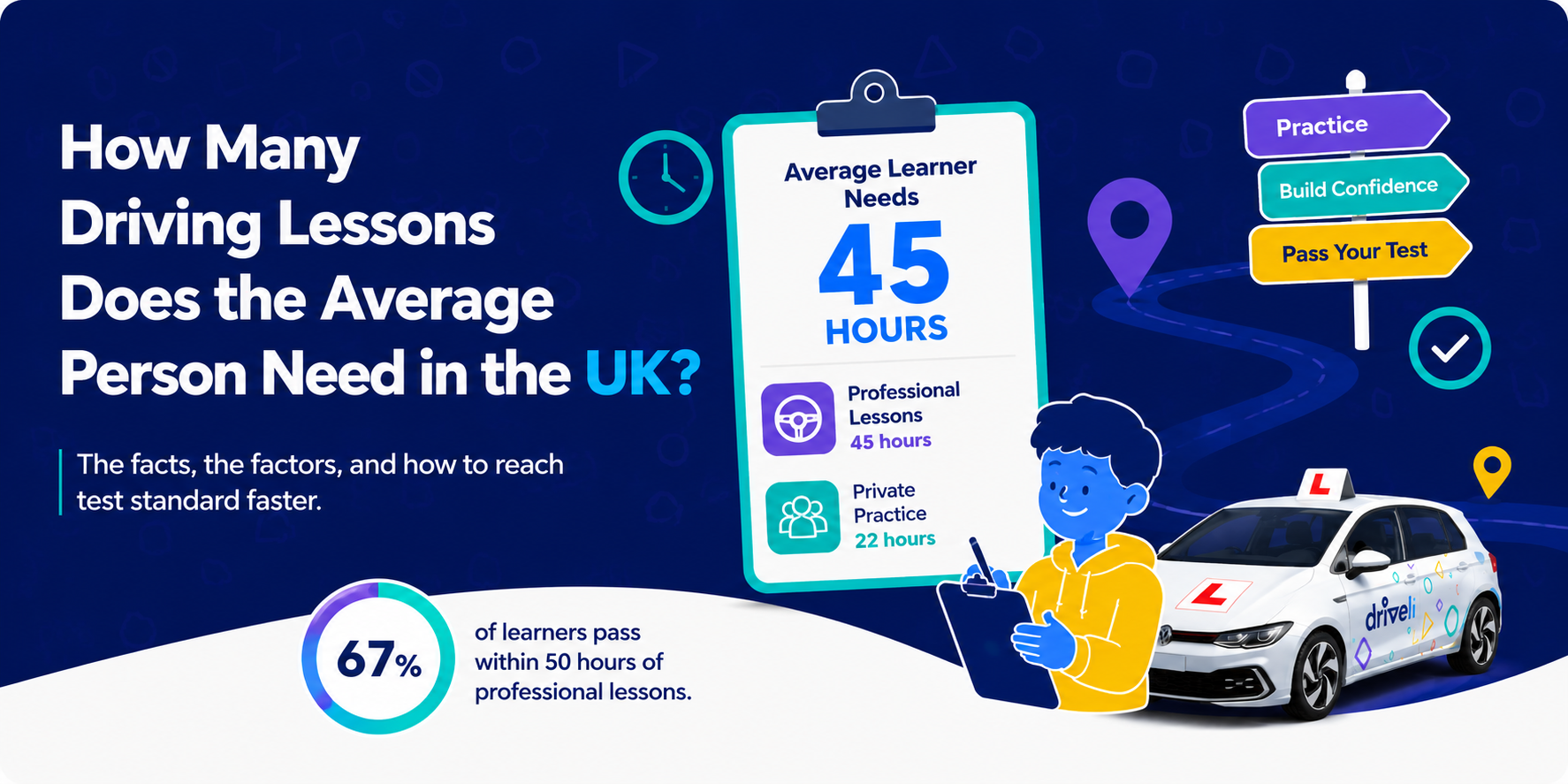
Lesson numbers are not a measure of intelligence. Progress is affected by frequency, private practice, previous experience, confidence and the complexity of local roads.
Compare your current ability with your own earlier lessons, not with another learner's social-media update.
Build Difficulty Gradually
A structured plan may move from quiet roads to junctions, roundabouts, faster roads and independent driving. Repetition should build familiarity without keeping you in the same comfort zone forever.
When to Seek Additional Support
If anxiety is severe, affects daily life or creates panic symptoms, consider speaking to an appropriate healthcare professional. A driving instructor can adapt lessons but cannot diagnose or treat a medical condition.
Choose a Supportive Instructor
Look for reviews mentioning patience, calm communication and experience with nervous learners. Ask how the instructor manages anxiety before booking a large block.
Next Step
Confidence grows through safe, repeated experience. Choose a realistic lesson pace and recognise small improvements such as smoother control, earlier observations or fewer prompts.
Sources
NHS: guidance on anxiety and panic; GOV.UK: Driving lessons and learning to drive.